Mike's northbound truck
Cry MachoMike's northbound truck is the indispensable vehicle of Mike and Rafo’s passage from the city toward Rafo’s father, but its importance extends beyond transportation. At first it is quiet, comfortable, and under Mike’s control; after a hijacking, its damaged body and limited fuel expose how precarious that control is. The truck repeatedly gives the travelers a way forward, while its changing condition makes their vulnerability visible.
The truck and the journey
Early in the trip, the truck responds beautifully on an excellent, nearly empty road. Mike finds it quiet and as comfortable as a sedan, a contrast to the painful circumstances of the journey and to the unfamiliar road ahead. The low moon appears directly in front of him like an enormous headlight, and he accelerates toward it, enjoying the drive. For that moment, the vehicle makes the trip feel less like a difficult obligation and more like an exhilarating stretch of open road.
The truck is also the enclosed space in which Mike and Rafo must travel together. Mike takes satisfaction in having secured Rafo through deception rather than violence, and notes that, apart from their fight over the rooster, the boy has not been physically harmed. The cramped journey nonetheless produces friction and reveals the distance between them. While they are approaching Querétaro, Mike hears Rafo smoke, search the food bags, open a can, eat noisily, and eventually snore. The truck carries their provisions and gives Rafo a place to eat and sleep, but its enclosure also makes the details of their uneasy companionship impossible for Mike to ignore.
A means of evasion
When Mike and Rafo reach a police barricade, the truck becomes their means of avoiding the main road. Mike does not dare say that they are being pursued; he points to the vehicle and quietly tells Rafo to get in. A trooper’s whistle interrupts their dispute over Mike’s authority, and Rafo climbs into the back. Mike waits, reverses close to the car behind them, turns the wheel, and attempts a U-turn on the highway. Rafo then appears beside him, alarmed and asking what he is doing. Mike directs him to stay on the back roads. The maneuver shows the truck not merely carrying the travelers but enabling a sudden change of route when remaining on the highway seems unsafe.
That mobility is temporary. After the truck is hijacked, Mike and Rafo run after the departing thieves, but cannot catch them. They return to the camp for Macho and face the immediate consequence: they have no truck and are stranded. Rafo hopes they may get it back, while Mike questions whether calling the police is a realistic option. The loss turns the journey’s central resource into an absence; their plans now depend on recovering the vehicle rather than simply continuing to drive.
Recovery in Janasco
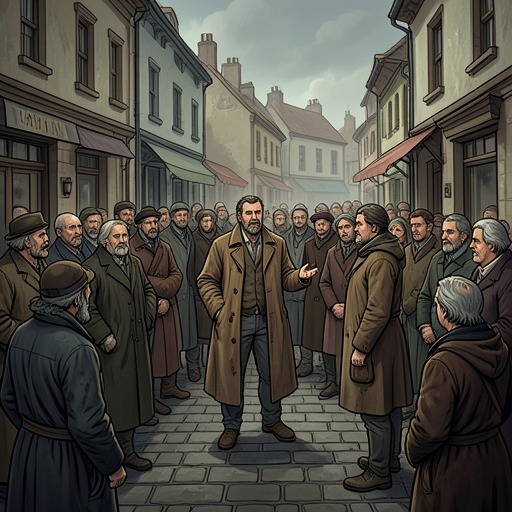
The truck reappears in Janasco, circling the perimeter of the plaza in a cloud of dust. The thieves’ three horses are tied to its rear bumper, a conspicuous transformation of Mike’s vehicle into the means of moving their stolen animals. Rafo spots it and calls out; both he and Mike run toward the side street as it turns away from the plaza. In their urgency to reach it, they forget Macho, leaving the rooster behind in the zócalo.
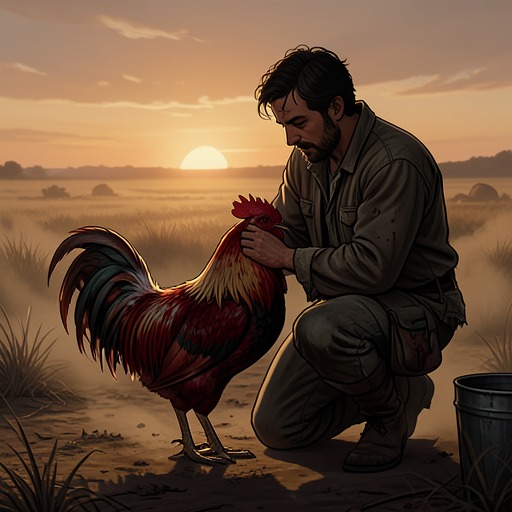
Mike starts the truck and drives away from the main street while a policeman takes one of the thieves away. Only then does he ask where Macho is. They turn back to the plaza, find the rooster among the pigeons, and bring him to the truck. The return of the vehicle restores their ability to travel, but it does not restore the truck to its earlier condition. The interruption has also produced a separate consequence: in the excitement of reclaiming their transport, they temporarily lose track of the animal Rafo cares for.
Damage, limits, and continuing use
Inspection reveals that the thieves have nearly wrecked the truck in less than a full day. The hood is bent and will not close completely, one backup light is shattered, the rear bumper is gone, and one of the two rear doors is missing. Mike cannot understand how a single accident could have damaged both the front and the rear. The list makes the vehicle’s material condition impossible to overlook: what had seemed quiet and dependable is now visibly compromised, with damage that affects its body and equipment as well as its usefulness on the road.
Rafo tries to find a positive side, observing that it still rides. Mike answers by focusing on the fuel: they have roughly a third of a tank, and the thieves have stolen their money. The truck is operable, but its remaining range is uncertain and they lack the cash to make the shortage easy to solve. Their recovery is therefore incomplete. They have regained the means of movement, yet the damaged vehicle and depleted resources keep them in a precarious position.
Later, the truck is parked near the square while music draws Rafo away. Mike waits for him, and Rafo eventually emerges from beneath a pile of junk in the rear. He asks whether they are going to the shrine; Mike says they cannot, because their lights would reveal them. Rafo proposes traveling without lights. The truck remains both shelter and possible escape route, but using it carries risk: even its ordinary equipment, the lights, can disclose their presence. Its role has shifted from comfortable conveyance to a compromised refuge whose usefulness depends on how carefully the travelers use it.
Narrative significance
The truck’s successive states organize the material pressures of the journey: smooth movement, evasive maneuver, sudden loss, recovery, and continued travel under constraint. Its value is practical rather than abstract. Mike and Rafo need it to move, carry food, and keep going; when it disappears, they are stranded, and when it returns, damage and stolen money limit what recovery means. The truck’s visible defects give the journey a physical cost, while the lost door and bumper contrast with the early impression of a quiet, comfortable vehicle.
The truck also becomes a shared space without becoming a source of easy trust. Rafo eats and sleeps in its rear, hides beneath junk there, and offers an idea for traveling without lights; Mike makes the driving decisions and weighs the risks of the route. Their reliance on the same vehicle brings them into proximity, but does not erase their disagreements or the danger surrounding them. By the time Rafo asks about the shrine, the truck can still take them onward, yet even that movement must be negotiated against exposure and scarcity.